
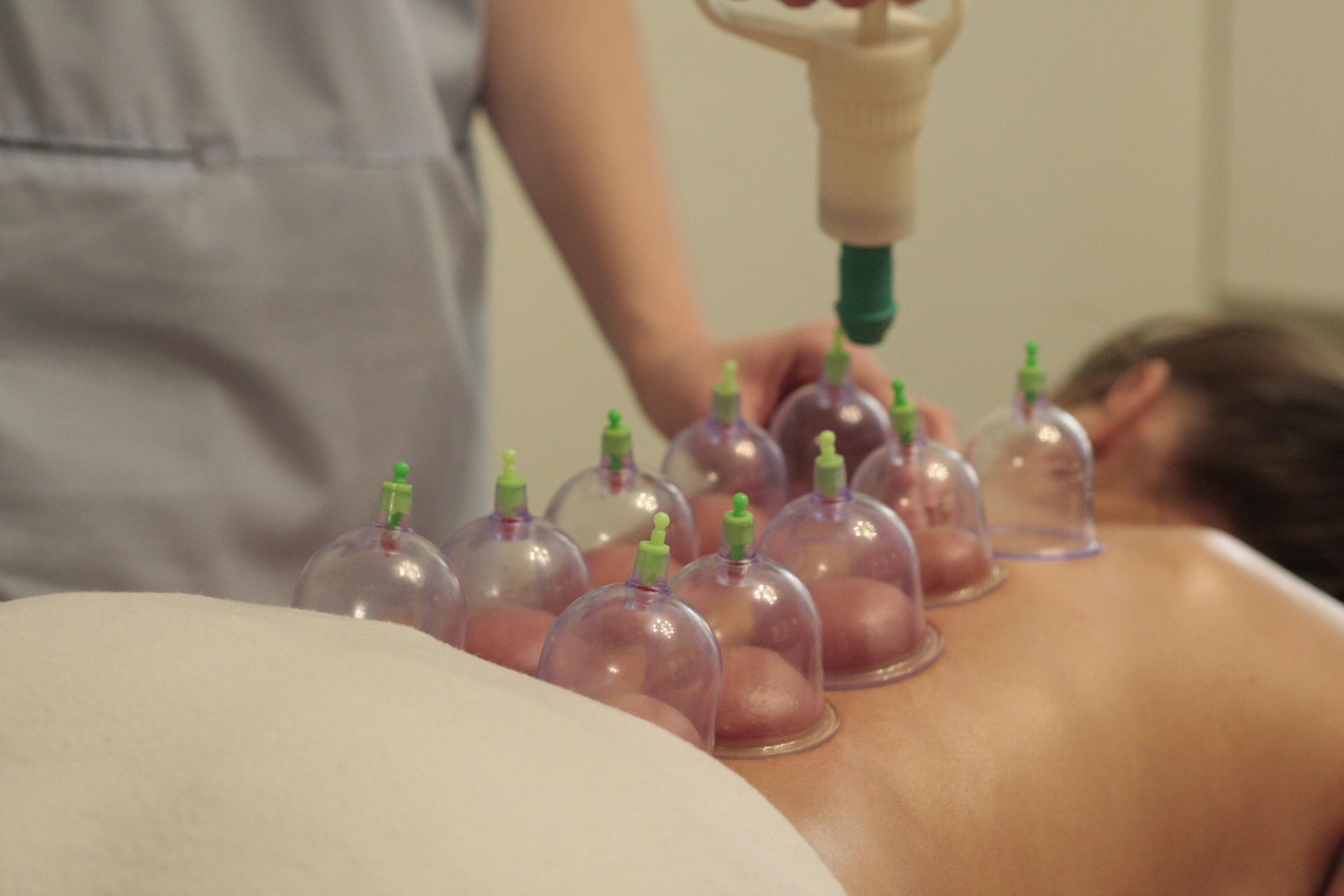
Cupping Therapy
A specialized therapeutic technique that uses gentle suction to target areas of muscular tension and soft tissue discomfort. By creating suction on the skin, cupping helps lift the underlying tissue rather than applying the direct pressure used in traditional massage. Many clients enjoy cupping as a way to address muscle tightness, encourage relaxation, and complement their massage experience.
Cupping can be incorporated into a massage session for an additional $5.00.
What Is Cupping Therapy?
Cupping is an ancient therapeutic practice with roots in traditional Chinese medicine and other traditional healing systems, dating back thousands of years.
The technique involves placing specially designed cups on the skin and creating suction to gently lift the underlying soft tissue. Depending on the technique used, cups may remain stationary for a short period or be gently moved across the treatment area.
Unlike traditional massage, which generally uses pressure to work into the muscles, cupping uses suction to create a lifting sensation. This approach offers a different way to work with areas of muscular tension and tightness.
What Are the Benefits of Cupping?
Many people incorporate cupping into their wellness routine to complement massage therapy and address areas of physical tension.
Cupping is commonly used with the goal of:
- Relieving muscular tightness and tension
- Easing muscle soreness and discomfort
- Encouraging local circulation
- Promoting relaxation
- Supporting mobility and ease of movement
- Complementing other massage and bodywork techniques
Some clients find cupping particularly helpful when addressing areas that feel tight, overworked, or difficult to release through traditional massage techniques alone.
What Should I Expect During a Cupping Session?
During treatment, your therapist will place cups on selected areas of the body and create suction using an appropriate cupping technique. You may experience a pulling or stretching sensation as the tissue is gently lifted.
The intensity of suction and the length of time the cups remain in place will depend on your individual needs and comfort level.
A Note About Cupping Marks: It is common for cupping to leave temporary circular marks on the skin. These marks are caused by the suction and may range in color from light pink to darker red or purple. They are not the same as typical bruises, although they may look similar. Marks generally fade over several days, though occasionally they may last longer.
Your therapist will discuss the technique with you and adjust the treatment according to your comfort level.
Cupping and Traditional Chinese Medicine
In Traditional Chinese Medicine (TCM), cupping is believed to work in ways similar to acupuncture by helping address stagnation and encourage the movement of blood and Qi (pronounced "chee"), or life energy, throughout the body.
According to TCM principles, blood circulation and the flow of Qi are closely connected. Where blood becomes stagnant, Qi is also believed to become stagnant, potentially contributing to discomfort, tension, and imbalances within the body.
Cupping uses suction to lift the soft tissue and is traditionally believed to help disperse stagnation, encourage the movement of blood and Qi, and restore balance within the body's energy pathways, known as meridians.
While acupuncture uses fine needles to stimulate specific points along these pathways, cupping uses suction to achieve a similar traditional goal of encouraging the free flow of Qi and blood.
Is Cupping Right for You?
Cupping may not be appropriate for everyone. Certain skin conditions, bleeding disorders, medications that increase bleeding risk, and other health concerns may require avoiding or modifying treatment. Please share your health history and any current concerns with your therapist before beginning treatment. If you are unsure whether cupping is appropriate for you, consult your healthcare provider.
Come as you are. Leave restored.